


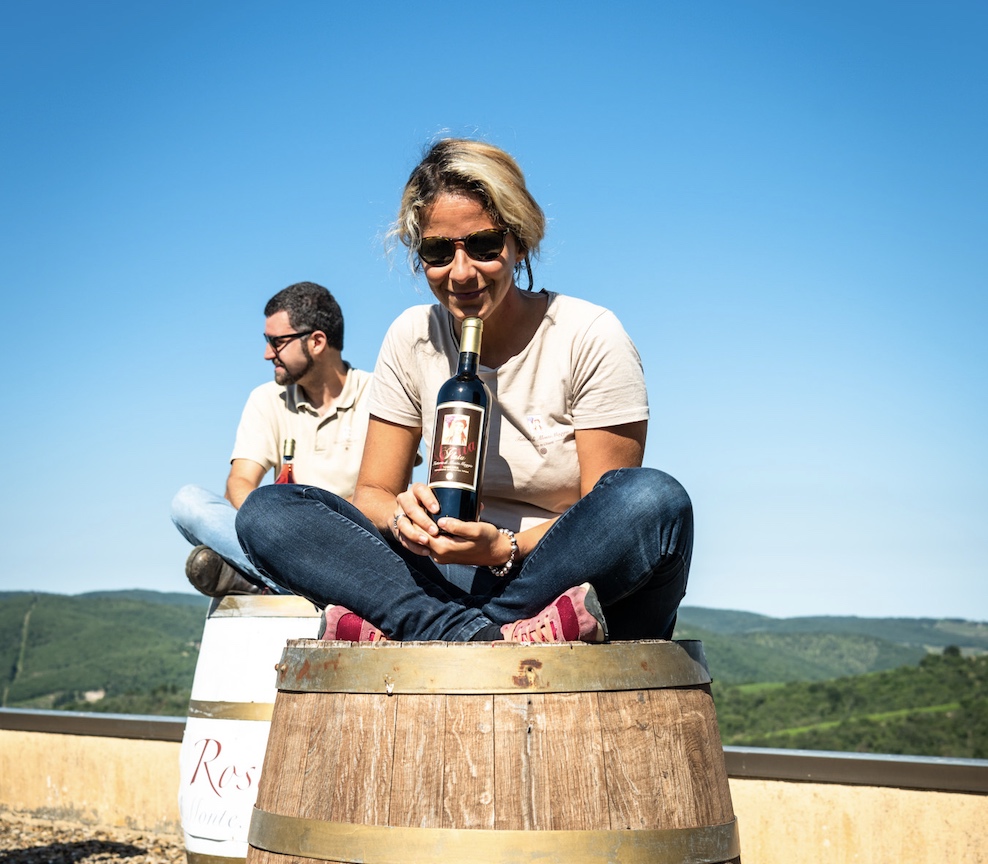
Not every wine tasting offers the same experience
Planning a wine tasting is often one of the most exciting parts of organising a trip to Tuscany.
But then comes the difficult part.
Which winery should you choose?
Search for the best wine tasting in Tuscany and you will find everything from quick tastings in city centres to private luxury tours, historic estates and small organic wineries hidden among the hills.
There is no single experience that is perfect for everyone.
But there are some important things you should consider before booking — especially if you want your wine tasting to become more than just another stop on your itinerary.
1. Choose the region before choosing the winery
“Tuscany” is not one single wine region.
It includes several important wine territories, each with its own identity.
Chianti Classico, Montalcino, Montepulciano and the Tuscan coast, for example, offer very different landscapes, grape varieties and wine styles.
If your idea of Tuscany involves rolling hills, Sangiovese, vineyards, medieval villages and historic wine culture, Chianti Classico is one of the most natural places to start.
Located between Florence and Siena, it is also particularly convenient for travellers staying in either city.
2. Check whether you are visiting a real working winery
This may sound obvious.
But “wine tasting” can describe very different experiences.
A tasting can take place in:
- a wine bar
- a tasting room
- a restaurant
- a wine shop
- a working winery
All can be enjoyable.
But they are not the same experience.
If you want to understand how wine is actually produced, look for a winery where you can see the vineyards and visit the cellar before tasting.
Seeing where the wine comes from changes the way you understand what is eventually poured into your glass.
3. Find out what the tasting actually includes
Don’t judge an experience only by the number of wines listed.
Five wines do not automatically make a tasting better than three.
Instead, look at the entire experience.
Does it include a vineyard visit?
Will you see the cellar?
Are the wines explained?
Are local products served?
Can you taste extra virgin olive oil?
Is there time for questions?
The best wine tasting in Tuscany is not necessarily the one that pours the most wine.
It is the one that gives those wines meaning.
4. Look at the size of the group
This can make an enormous difference.
In a large group, a wine tasting can easily become a presentation.
In a smaller group, it becomes a conversation.
You can ask questions.
The host can understand your level of wine knowledge.
The discussion can change depending on your interests.
And there is usually more time to explore individual wines.
If personal interaction matters to you, check the group size before booking.
5. Don’t be intimidated by technical descriptions
You do not need to be a wine expert to book a serious tasting.
Actually, you shouldn’t need any previous knowledge at all.
A good wine experience should make complicated concepts easier to understand.
Terroir.
Tannins.
Acidity.
Fermentation.
Ageing.
Vintage variation.
These words can sound technical, but they describe things that become surprisingly intuitive when someone explains them clearly while you are tasting.
The best wine educators don’t make wine sound more complicated.
They make it simpler.
6. Consider an organic winery
If you are interested in understanding the relationship between wine and landscape, visiting an organic winery can add another layer to the experience.
Wine begins in the vineyard.
And organic viticulture encourages you to look beyond the grapes themselves.
Soil health.
Biodiversity.
Vegetation.
Insects.
Forests.
Seasonal changes.
These are not separate from wine production.
They are part of the environment in which the vine grows.
For travellers interested in agriculture, sustainability and terroir, this can make the winery visit considerably more meaningful.
7. Look for experiences that go beyond wine
Tuscany’s wine culture has always been connected to food.
Extra virgin olive oil, bread, cheese and cured meats are not simply accessories added to make a tasting more attractive.
They are part of the same agricultural and gastronomic culture.
A winery that introduces you to these products gives you a broader understanding of Tuscany.
And tasting wine alongside food can also help you understand how both change when experienced together.
Why Chianti Classico is ideal for a wine tasting
Chianti Classico offers something particularly interesting for visitors because the landscape changes continuously.
Altitude varies.
Soils vary.
Exposure varies.
Forests alternate with vineyards and olive groves.
Sangiovese responds to all these differences.
That means a wine tasting here can become an introduction to one of the fundamental ideas behind wine:
place matters.
The wine is not created only in the cellar.
Its story begins much earlier.
Fattoria di Montemaggio: experiencing wine where it begins
At Fattoria di Montemaggio, in the heart of Chianti Classico near Radda in Chianti, the tasting experience is designed around this idea.
Montemaggio is an organic estate where vineyards, olive groves and woodland form part of the same landscape.
Guests are introduced not only to the finished wines, but also to the environment and decisions behind them.
The experience connects:
- organic vineyards
- terroir
- altitude
- cellar work
- wine tasting
- extra virgin olive oil
- Tuscan food culture
Instead of treating each element separately, the tasting shows how they are connected.
Is Montemaggio one of the best wine tastings in Chianti Classico?
“Best” will always depend on what you are looking for.
If you want a very quick tasting, a large organised tour or simply somewhere to drink a glass of wine, another experience may suit you better.
But if you are searching for the best wine tasting in Chianti Classico because you want to understand the region, Montemaggio offers many of the elements worth looking for:
- an organic working winery
- vineyard and cellar visits
- guided tastings
- small-group hospitality
- high-altitude vineyards
- estate-produced wines
- extra virgin olive oil
- local Tuscan products
- an educational but accessible approach
The purpose is not simply to tell you whether a wine is good.
It is to help you understand why it tastes the way it does.
How far in advance should you book a wine tasting in Tuscany?
Whenever possible, book before arriving.
Many working wineries organise visits by appointment rather than operating as walk-in tasting rooms.
Advance booking becomes particularly important during the busiest months of the Tuscan travel season.
It also allows the winery to organise the experience properly rather than simply fitting visitors into the day.
If there is a particular estate you genuinely want to visit, don’t leave it until you are already driving through the countryside.
Should you visit one, two or three wineries in a day?
More is not necessarily better.
If your goal is to learn and enjoy the experience, one or two wineries in a day can be plenty.
A proper visit takes time.
There is the vineyard.
The cellar.
The tasting.
The conversation.
And perhaps food or olive oil.
Then there is Tuscany itself.
You may want to stop for lunch, explore a village or simply enjoy the drive.
Trying to collect wineries can mean missing the very thing you came to Tuscany to experience.
How do you recognise a great wine tasting?
Ask yourself a simple question after the visit:
Do I understand the wine better than I did when I arrived?
If the answer is yes, the tasting has done something valuable.
You may remember a particular bottle.
But you may also remember the vineyard.
The person who explained it.
The landscape.
The food.
The smell of the cellar.
And perhaps the moment when something you had heard about wine for years suddenly made sense.
That is what a great wine tasting can do.
Finding the best wine tasting in Tuscany
There is no universal ranking that can tell every traveller which winery they will enjoy most.
Instead, look for the experience that matches the Tuscany you want to discover.
If authenticity, organic viticulture, personal hospitality, wine education and a genuine connection with the landscape matter to you, consider visiting a smaller working winery in Chianti Classico.
And if those are the things you are looking for, Fattoria di Montemaggio is a place worth discovering.
Because choosing the best wine tasting in Tuscany isn’t really about finding the longest wine list.
It is about finding an experience that makes you understand the place behind the wine.
Discover Fattoria di Montemaggio
👉 Explore our wine tasting experiences:
https://www.montemaggio.com/wine-tasting-chianti-classico
👉 Book your visit:
https://www.montemaggio.com/tour-reservation
✍️ ABOUT THE AUTHOR
Francesco Garuglieri is a Wine Communicator at Fattoria di Montemaggio, an award-winning organic winery in the heart of Chianti Classico, Tuscany.
Specialising in wine communication and hospitality, his work focuses on making wine accessible and understandable by connecting terroir, organic viticulture, biodiversity and authentic Tuscan hospitality. His articles explore Chianti Classico, wine tourism and the culture behind meaningful wine experiences in Tuscany.
Lascia un commento