

Two of Tuscany’s most celebrated red wines share the same grape variety, yet offer remarkably different expressions. Discover how terroir, climate, winemaking and ageing distinguish Chianti Classico from Brunello di Montalcino.
Tuscany is one of the world’s most celebrated wine regions, known for its rolling hills, historic villages, centuries-old vineyards and exceptional red wines.
Among its most prestigious wines, two names stand out: Chianti Classico and Brunello di Montalcino.
Both are deeply connected to Tuscan wine culture. Both are produced from Sangiovese. And both can offer remarkable complexity, structure and ageing potential.
Yet they are far from identical.
So what exactly is the difference between Chianti Classico and Brunello di Montalcino?
Is Brunello always more powerful? Is Chianti Classico better suited to food? Why does Brunello generally spend longer ageing before release? And which wine should you choose?
The answer begins with understanding something fundamental about wine: the same grape variety can produce very different wines depending on where and how it is grown.
In this guide, we explore the differences between these two famous Tuscan wines and explain why tasting Sangiovese in Chianti Classico is an excellent way to discover the extraordinary diversity of Tuscany.
1. Chianti Classico and Brunello: Two Wines, One Grape Variety
The most important connection between Chianti Classico and Brunello di Montalcino is Sangiovese.
Sangiovese is one of Italy’s most important red grape varieties and plays a central role in Tuscan viticulture.
It is known for characteristics that can include:
- Naturally pronounced acidity.
- Distinctive tannic structure.
- Red fruit aromas, particularly cherry.
- Floral notes such as violet.
- Herbal, earthy and savoury characteristics.
- The ability to develop additional complexity with ageing.
However, Sangiovese is highly responsive to its growing environment.
Altitude, temperature, rainfall, soil characteristics and vineyard management can all influence how the grapes develop.
Winemaking decisions introduce further differences.
This explains why two wines made from Sangiovese can have distinct personalities, even when they come from the same region of Italy.
2. Where Is Chianti Classico Produced?
Chianti Classico is produced in a defined historic wine-growing area between Florence and Siena.
The production zone includes the territories of several municipalities, including Radda in Chianti, Gaiole in Chianti, Castellina in Chianti and Greve in Chianti, as well as portions of neighbouring municipalities.
The landscape is characterised by hills, vineyards, olive groves, woodland and considerable geographical diversity.
Vineyard altitude varies significantly throughout the denomination.
Soils also differ, with formations such as galestro and alberese playing an important role in several areas.
These variations contribute to the diversity of Chianti Classico wines.
A Chianti Classico from Radda may express different characteristics from one produced in a warmer or lower-altitude part of the denomination.
This diversity is one of the region’s greatest strengths.
3. Where Is Brunello di Montalcino Produced?
Brunello di Montalcino is produced exclusively within the municipality of Montalcino, in the province of Siena.
The production area lies south of the Chianti Classico region.
Montalcino features a varied landscape, with vineyards planted at different elevations and exposures.
Climatic conditions can differ considerably between the northern and southern parts of the territory.
Some vineyard sites experience relatively cooler conditions, while others benefit from warmer temperatures and greater sun exposure.
These differences influence grape ripening and contribute to the range of styles found within Brunello di Montalcino.
Like Chianti Classico, Brunello is therefore not a single, uniform expression of Sangiovese.
4. The Main Difference: Sangiovese Requirements
Although both wines are based on Sangiovese, their production regulations differ.
Brunello di Montalcino must be made from 100% Sangiovese.
Chianti Classico must contain at least 80% Sangiovese in its standard and Riserva categories.
The remaining proportion, when used, may consist of other authorised red grape varieties.
Chianti Classico Gran Selezione follows stricter rules, requiring at least 90% Sangiovese, with the remaining portion limited to authorised native red varieties.
These requirements give producers different options when developing their wines.
However, the grape composition alone does not explain all the differences between Chianti Classico and Brunello.
Territory and production choices remain equally important.
5. How Does Terroir Influence the Two Wines?
The French term terroir describes the interaction between a vineyard’s natural environment and the factors that influence grape growing.
It includes elements such as:
- Climate and microclimate.
- Altitude.
- Soil composition and structure.
- Slope and exposure.
- Water availability.
- Vineyard location.
Human decisions, including vineyard management, also contribute to the final expression of the wine.
Terroir in Chianti Classico
Chianti Classico includes numerous hillside vineyards, some situated at relatively high elevations.
In areas such as Radda in Chianti, altitude can contribute to cooler growing conditions and differences between daytime and nighttime temperatures.
Depending on the site and vintage, these conditions can influence ripening, acidity and aromatic development.
The presence of different soil formations adds another layer of complexity.
Terroir in Montalcino
Montalcino also includes substantial differences in altitude, exposure and soil composition.
Some sites experience warmer growing conditions, which can influence the ripeness and concentration of Sangiovese grapes.
Other areas offer cooler conditions and different maturation patterns.
It would therefore be misleading to describe every Brunello as powerful or every Chianti Classico as light.
Both denominations contain considerable stylistic diversity.
6. Chianti Classico vs Brunello: How Do They Taste?
Although every wine is different, certain characteristics are commonly associated with the two denominations.
Typical Characteristics of Chianti Classico
Chianti Classico often displays:
- Red cherry and other red fruit aromas.
- Floral notes.
- Fresh acidity.
- Distinctive tannins.
- Herbal and savoury nuances.
- A lively, balanced structure.
Depending on the producer and category, it may range from fresh and approachable to highly structured and age-worthy.
Typical Characteristics of Brunello di Montalcino
Brunello di Montalcino may display:
- Cherry and plum aromas.
- Dried herbs and floral notes.
- Firm tannic structure.
- Considerable depth and concentration.
- Complex aromas that develop with ageing.
- A long, persistent finish.
However, these descriptions are generalisations rather than fixed rules.
A mature Chianti Classico Gran Selezione may share many characteristics with Brunello, while some Brunello wines emphasise elegance and freshness rather than power.
The most interesting differences emerge through tasting.
7. Which Wine Has Higher Acidity?
Sangiovese is naturally associated with relatively high acidity.
This characteristic contributes to the freshness, balance and food-pairing versatility of both Chianti Classico and Brunello.
However, acidity is influenced by numerous factors.
These include growing conditions, grape maturity, vintage characteristics and winemaking decisions.
Some Chianti Classico wines, particularly those from cooler or higher-altitude vineyards, may display particularly vibrant acidity.
Brunello can also retain excellent freshness, despite often being associated with a more structured style.
It is therefore inaccurate to assume that one denomination always has higher acidity than the other.
The individual wine matters more than the name alone.
8. Why Does Brunello Age Longer Before Release?
One of the clearest differences between Chianti Classico and Brunello concerns the minimum ageing requirements.
Brunello di Montalcino must undergo a longer period of ageing before it can be released.
This is established by the denomination’s production regulations.
Ageing Requirements Compared
| Wine | Minimum ageing requirements |
|---|---|
| Chianti Classico | Release no earlier than 1 October following the harvest |
| Chianti Classico Riserva | At least 24 months, including 3 months in bottle |
| Chianti Classico Gran Selezione | At least 30 months, including 3 months in bottle |
| Brunello di Montalcino | Release no earlier than 1 January of the fifth year following harvest, including at least 2 years in oak and 4 months in bottle |
| Brunello di Montalcino Riserva | Release no earlier than 1 January of the sixth year following harvest, including at least 2 years in oak and 6 months in bottle |
These regulations create different production timelines.
However, a longer mandatory ageing period does not automatically make a wine superior.
Ageing is one factor among many that influence the final result.
9. Does Brunello Always Have Greater Ageing Potential?
Brunello di Montalcino is internationally recognised for its ageing potential.
Many well-structured examples can develop additional complexity over extended periods.
However, Chianti Classico also includes wines with considerable capacity for ageing.
In particular, certain Riserva and Gran Selezione wines can evolve beautifully in bottle.
Ageing potential depends on factors such as:
- Fruit quality.
- Acidity.
- Tannin structure.
- Balance.
- Vintage conditions.
- Winemaking decisions.
- Storage conditions.
A wine’s denomination provides useful information, but it does not determine its entire future.
For collectors and enthusiasts, tasting older vintages from both regions can be especially rewarding.
10. Is Brunello Better Than Chianti Classico?
This is one of the most common questions among people discovering Tuscan wine.
But the answer is simple: neither wine is automatically better than the other.
Brunello and Chianti Classico are different expressions of Sangiovese, produced under different regulations and within different territories.
Quality depends on the producer, vineyard, vintage and winemaking approach.
Personal preferences also matter.
Some wine lovers prefer the freshness and lively fruit character of Chianti Classico.
Others enjoy the structure and complexity often associated with mature Brunello.
Many appreciate both, depending on the occasion.
Comparing them should not be about choosing a winner.
It should be about discovering how one grape variety can express different aspects of Tuscany.
11. Which Wine Is Better with Food?
Both Chianti Classico and Brunello di Montalcino can be excellent food wines.
Their acidity and tannic structure make them particularly suitable for a wide range of Tuscan dishes.
Food Pairings with Chianti Classico
Chianti Classico can work beautifully with:
- Pasta with tomato-based sauces.
- Pappardelle with meat ragù.
- Grilled meats.
- Roasted chicken.
- Pecorino Toscano.
- Mushroom dishes.
Its acidity makes it especially versatile at the table.
Food Pairings with Brunello di Montalcino
Structured Brunello wines can pair particularly well with:
- Slow-cooked beef.
- Braised meats.
- Game dishes.
- Rich stews.
- Mature cheeses.
- Complex mushroom preparations.
However, the best pairing depends on the wine’s style, age and the specific dish.
A mature Chianti Classico Riserva may work beautifully with a rich meat dish, while a fresher Brunello can complement less intense preparations.
12. Which Wine Should You Choose for a Special Occasion?
The answer depends on the experience you want.
If you are planning a relaxed dinner featuring traditional Tuscan dishes, Chianti Classico can be an excellent choice.
If you are celebrating an important occasion and want to explore a mature, structured Sangiovese, Brunello may also be a wonderful option.
But a carefully selected Chianti Classico Riserva or Gran Selezione can be just as suitable for a special celebration.
The most important consideration is choosing a wine that matches your preferences, food and occasion.
Prestige and price should not be the only factors.
13. Why Chianti Classico Is Essential for Understanding Sangiovese
For anyone interested in Sangiovese, Chianti Classico is an essential region to explore.
Its geographical diversity offers opportunities to discover how altitude, soil and vineyard exposure influence the grape.
The different categories of Chianti Classico also allow visitors to explore a range of wine styles.
A tasting may reveal differences between younger wines, Riserva and Gran Selezione.
It can also demonstrate how winemaking and ageing influence the same grape variety.
This makes Chianti Classico an excellent destination for both beginners and experienced wine enthusiasts.
Rather than simply reading about Sangiovese, visitors can discover it directly in the landscape where it grows.
14. Discover Sangiovese at Fattoria di Montemaggio
Located in Radda in Chianti, Fattoria di Montemaggio is an organic winery surrounded by vineyards, olive groves and woodland.
Parts of the estate reach approximately 600 metres above sea level.
Its vineyard environment includes soils characterised by galestro and alberese, while Sangiovese plays a central role in the winery’s production.
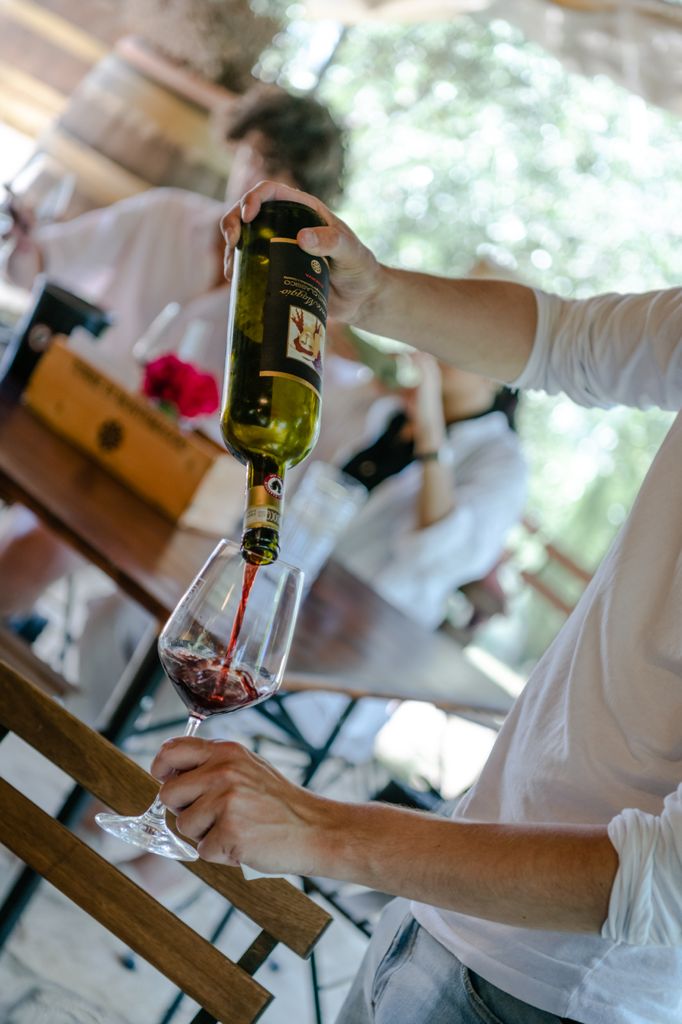
Through guided wine tasting experiences, visitors can discover Montemaggio’s wines and learn more about the characteristics of Chianti Classico.
The experience offers an opportunity to explore how terroir, organic viticulture and winemaking decisions contribute to the identity of Sangiovese.
For travellers who have tasted Brunello di Montalcino, visiting Chianti Classico provides an interesting opportunity to discover another expression of the same grape.
And for those who are new to Tuscan wine, it is an excellent introduction to one of Italy’s most important wine regions.
Fattoria di Montemaggio welcomes visitors throughout the year, including autumn and winter, with guided tasting experiences available by reservation and subject to availability.
Discover the available experiences and plan your visit:
Frequently Asked Questions: Chianti Classico vs Brunello di Montalcino
What is the main difference between Chianti Classico and Brunello?
The main differences concern their production areas, grape composition requirements, ageing regulations and the environmental conditions that influence their styles.
Are Chianti Classico and Brunello made from the same grape?
Yes. Both are based on Sangiovese. Brunello must be made from 100% Sangiovese, while standard Chianti Classico and Riserva require at least 80%.
Is Brunello stronger than Chianti Classico?
Not necessarily. Alcohol levels, structure and concentration vary according to the producer, vintage and individual wine.
Is Brunello always more expensive than Chianti Classico?
Brunello is often positioned at a higher price point, partly because of its production and ageing requirements, but prices vary considerably between producers and wines.
Which wine has more tannins?
Both wines can have substantial tannic structure. The perceived intensity depends on grape maturity, extraction, ageing and the individual wine.
Can Chianti Classico age as long as Brunello?
Certain Chianti Classico Riserva and Gran Selezione wines can develop over many years. Ageing potential depends on the individual wine rather than the denomination alone.
Is Chianti Classico a good wine for beginners?
Yes. Its range of styles makes it an excellent introduction to Sangiovese and Tuscan wine culture.
Which wine is better with pasta?
Chianti Classico is often an excellent choice for pasta dishes, particularly those featuring tomato-based sauces or traditional meat ragù.
Is Chianti Classico produced near Montalcino?
Both regions are located in Tuscany, but Chianti Classico lies between Florence and Siena, while Montalcino is situated farther south.
Where can I taste Chianti Classico in Tuscany?
Fattoria di Montemaggio, an organic winery in Radda in Chianti, offers guided wine tasting experiences dedicated to discovering its wines.
Can I visit a Chianti Classico winery in winter?
Yes. Some wineries welcome visitors throughout the year. Fattoria di Montemaggio offers experiences in autumn and winter, subject to advance reservation and availability.
Chianti Classico and Brunello: Two Expressions of Tuscany’s Greatest Grape
Chianti Classico and Brunello di Montalcino demonstrate the remarkable versatility of Sangiovese.
Although they share the same grape variety, differences in geography, climate, vineyard conditions and production regulations contribute to their individual identities.
Brunello is celebrated for its structure, complexity and ageing tradition.
Chianti Classico offers an extraordinary diversity of styles, from fresh and expressive wines to structured Riserva and Gran Selezione with considerable ageing potential.
Neither should be understood as a substitute for the other.
Together, they reveal the richness of Tuscan viticulture.
At Fattoria di Montemaggio, visitors can explore Sangiovese in the heart of Chianti Classico through guided tastings that connect wine, terroir and organic viticulture.
Because understanding Sangiovese means discovering not just the grape, but the many places and people that give it character.
Discover Fattoria di Montemaggio and plan your wine tasting:
About the Author
Francesco Garuglieri is a Wine Communicator at Fattoria di Montemaggio, an award-winning organic winery in the heart of Chianti Classico, Tuscany.
Specialising in wine communication and hospitality, his work focuses on making wine accessible by connecting terroir, organic viticulture, biodiversity and the experience of visiting Tuscany. His articles explore Chianti Classico, wine tourism and the culture behind authentic Tuscan wine experiences.
Leave a Reply