

From traditional Tuscan dishes to unexpected combinations, discover how to pair Chianti Classico with food and why Sangiovese is one of Italy’s most versatile grapes.
When people think of Tuscany, two things immediately come to mind: wine and food.
A glass of Chianti Classico, a plate of handmade pasta, fresh bread with extra virgin olive oil, a traditional Tuscan stew or a selection of local cheeses.
These are some of the experiences that make a journey through Tuscany so memorable.
But pairing wine and food is about more than following tradition.
What food goes best with Chianti Classico? Does it always need red meat? Can you pair Sangiovese with vegetarian dishes? And what is the difference between pairing Chianti Classico Annata, Riserva and Gran Selezione?
Understanding a few simple principles can completely change the way you experience wine.
And the good news is that you do not need to be a sommelier to get started.
In this guide, we explore the fundamentals of food and wine pairing, discover some of Tuscany’s most characteristic dishes and learn how to choose the right Chianti Classico for different occasions.
Why is Chianti Classico such a food-friendly wine?
The answer begins with Sangiovese.
Sangiovese is the principal grape variety used to produce Chianti Classico DOCG and one of the most important grapes in Italian winemaking.
Its natural characteristics make it particularly interesting at the table.
Chianti Classico wines often display:
- Refreshing acidity, which helps balance rich and fatty dishes.
- Noticeable tannins, which interact with the texture and proteins of food.
- Red fruit aromas, often reminiscent of cherry and red berries.
- Savoury and herbal nuances, depending on the wine’s origin and production.
- A range of structures and styles, from lively, youthful wines to more complex and mature expressions.
These characteristics explain why Chianti Classico can accompany such a wide variety of dishes.
Its acidity is particularly important.
When paired with food containing fat or rich sauces, a wine with refreshing acidity can make each bite feel more balanced.
Tannins also play a role, especially when pairing red wine with protein-rich dishes.
However, successful food pairing depends on more than acidity and tannins alone.
The intensity of the dish, its seasoning, cooking method and texture all matter.
What are the basic rules of food and wine pairing?
Before exploring specific dishes, it helps to understand a few fundamental principles.
1. Balance the intensity of the wine and the food
A delicate dish can easily be overwhelmed by a powerful wine.
Similarly, a light wine may struggle to complement a very rich or intensely flavoured meal.
The goal is to find a balance.
A youthful, fruit-driven Chianti Classico may work beautifully with a simple pasta dish.
A more structured wine may be better suited to slow-cooked meat or aged cheese.
2. Use acidity to balance richness
Acidity is one of the most useful characteristics in food pairing.
It can provide freshness alongside dishes containing olive oil, cheese, butter or fatty meat.
This is one reason why Sangiovese is so versatile with Tuscan cuisine.
3. Consider tannins and texture
Tannins create a drying sensation in the mouth.
Protein-rich foods, particularly certain meat dishes, can help soften the perception of tannins.
However, very tannic wines may be less suitable for delicate dishes or foods that already have strong bitter characteristics.
4. Look for complementary flavours
Sometimes, the best pairing comes from flavours that work naturally together.
A wine with savoury and herbal notes may complement a dish featuring rosemary, thyme or other Mediterranean herbs.
A mature wine with more complex aromas may be particularly interesting alongside slow-cooked dishes.
5. Remember that personal taste matters
There is no single perfect pairing for every person.
Food and wine pairing is partly technical, but it is also personal.
Experimenting is one of the most enjoyable ways to learn.
What food goes best with Chianti Classico?
Chianti Classico is traditionally associated with Tuscan cuisine, but its versatility extends well beyond regional dishes.
Some of the most interesting combinations include pasta with meat sauces, roasted meats, grilled vegetables, mushroom dishes and aged cheeses.
Let’s explore a few classic examples.
Chianti Classico and pasta: which dishes work best?
Pasta is one of the easiest starting points for exploring food and wine pairing.
But the sauce matters more than the pasta shape.
Pappardelle al ragù di cinghiale
Wild boar ragù is a traditional Tuscan preparation known for its rich flavour and slow cooking.
Its intensity makes it a natural partner for a structured Chianti Classico.
The wine’s acidity helps balance the richness of the sauce, while its tannins and savoury characteristics complement the meat.
A Chianti Classico Riserva can be an interesting choice, particularly when the dish is deeply flavoured.
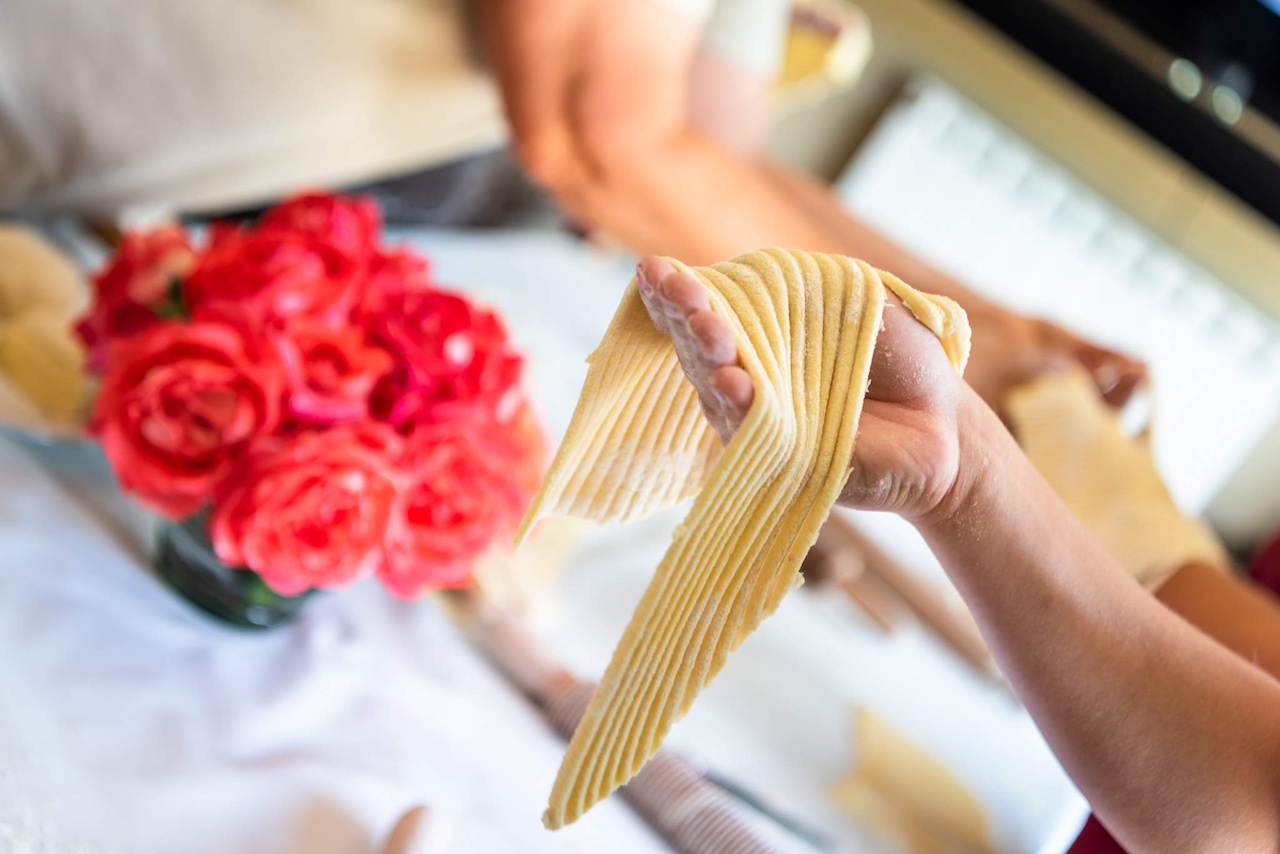
Pici al ragù
Pici are a traditional type of thick, hand-rolled pasta associated with southern Tuscany.
When served with a rich meat ragù, they pair beautifully with Sangiovese-based wines.
A Chianti Classico Annata with good freshness and moderate structure can provide an enjoyable balance.
Pasta with tomato sauce
One of the most accessible pairings is also one of the most effective.
Tomatoes contain natural acidity, so pairing them with a wine that also has refreshing acidity can create a harmonious combination.
Chianti Classico is particularly interesting with tomato-based pasta sauces, especially when accompanied by herbs, olive oil or grated cheese.
Does Chianti Classico pair well with Bistecca alla Fiorentina?
Yes. This is one of the most famous traditional pairings in Tuscany.
Bistecca alla Fiorentina is a thick-cut steak traditionally cooked over high heat and served relatively simply.
The meat’s rich flavour and protein content make it an interesting partner for structured red wines.
A Chianti Classico Riserva or Gran Selezione may be particularly suitable, depending on the wine’s style.
The wine’s acidity provides freshness, while the tannins interact with the meat’s texture.
However, not every Fiorentina requires the most powerful wine available.
The cut, cooking method, seasoning and individual wine style should all be considered.
A balanced Chianti Classico with good acidity and well-integrated tannins can be an excellent choice.
What wine pairs best with Tuscan pecorino cheese?
Pecorino Toscano is one of the region’s most characteristic cheeses.
However, not all pecorino tastes the same.
A younger cheese generally has a softer texture and more delicate flavour.
An aged pecorino is firmer, saltier and more intense.
For younger pecorino, a fresh and approachable Chianti Classico may be an interesting option.
For aged pecorino, a more structured wine can provide a better balance of intensity.
It is worth remembering that salt can change the perception of wine, sometimes making tannins feel softer and fruit flavours more noticeable.
A comparative tasting with different cheeses is an excellent way to discover these interactions.
Can you pair Chianti Classico with vegetarian food?
Absolutely.
One of the most common misconceptions about red wine is that it should always be paired with meat.
In reality, Chianti Classico can work beautifully with a wide variety of vegetarian dishes.
The key is to consider the ingredients, cooking method and overall intensity.
Ribollita
Ribollita is a traditional Tuscan soup made with vegetables, beans and bread.
Its rich texture and savoury flavours can work well with a fresh, moderately structured Chianti Classico.
The wine’s acidity provides contrast to the richness of the dish.
Mushroom dishes
Mushrooms are particularly interesting with Sangiovese.
Their earthy and savoury characteristics can complement the more complex aromas found in some Chianti Classico wines.
Try pairing a Chianti Classico Riserva with mushroom risotto or roasted mushrooms.
Grilled vegetables
Grilled aubergines, peppers and courgettes can also work with Chianti Classico, particularly when prepared with olive oil and Mediterranean herbs.
For lighter vegetable dishes, choose a wine with restrained tannins and a fresh profile.
Beans and traditional Tuscan dishes
Beans are an essential part of Tuscan cuisine.
Dishes such as fagioli all’uccelletto, prepared with tomatoes, garlic and sage, can be particularly interesting with Chianti Classico.
The combination of tomato acidity, herbs and savoury flavours creates a natural connection with Sangiovese.
Chianti Classico Annata, Riserva and Gran Selezione: which should you choose with food?
Chianti Classico includes different categories, each with specific production requirements.
Understanding their differences can help you select the most suitable wine for a meal.
Chianti Classico Annata
Chianti Classico Annata is often appreciated for its freshness, fruit character and versatility.
Depending on the producer and vintage, it may offer an approachable structure that works well with many everyday dishes.
Pairing ideas:
- Pasta with tomato sauce
- Pizza with tomato and cheese
- Ribollita
- Grilled vegetables
- Medium-aged cheeses
Chianti Classico Riserva
Chianti Classico Riserva requires a longer minimum ageing period than Annata.
Depending on the producer’s style, it may offer greater aromatic complexity, structure and depth.
Pairing ideas:
- Pappardelle with wild boar ragù
- Roasted meats
- Mushroom-based dishes
- Aged pecorino
- Slow-cooked Tuscan stews
Chianti Classico Gran Selezione
Gran Selezione is a category with specific production requirements, including estate-grown grapes and extended minimum ageing.
These wines can offer distinctive expressions of their origin, often with considerable structure and complexity.
Pairing ideas:
- Bistecca alla Fiorentina
- Rich meat dishes
- Braised meats
- Mature cheeses
- Elaborate dishes with intense flavours
These suggestions are starting points rather than rigid rules.
A wine’s actual characteristics matter more than the category printed on its label.
What temperature should Chianti Classico be served at with food?
Serving temperature can significantly influence how a wine tastes.
If a red wine is served too warm, alcohol may become more noticeable and the wine can lose some of its freshness.
If served too cold, aromas may become less expressive and tannins can feel more pronounced.
For many Chianti Classico wines, a serving temperature of approximately 16–18°C is a useful starting point.
Lighter styles may benefit from being served slightly cooler, while more structured wines can be enjoyable towards the upper end of this range.
The ideal temperature depends on the individual wine and personal preference.
Does Chianti Classico need to be decanted before a meal?
Not always.
Some young Chianti Classico wines can be enjoyed directly after opening.
Others may benefit from a little time in the glass.
More structured or mature wines can sometimes benefit from decanting, although this depends on their condition and style.
Decanting can serve different purposes, including separating sediment from older wines or allowing a younger wine to interact with oxygen.
However, excessive aeration can be unsuitable for delicate older bottles.
When in doubt, taste the wine first and observe how it evolves.
Can Chianti Classico be paired with international cuisine?
Yes.
Although Chianti Classico has a natural connection with Tuscan food, its versatility makes it interesting with dishes from other culinary traditions.
Tomato-based Mediterranean dishes, grilled meats, mushroom preparations and certain roasted vegetables can all provide opportunities for successful pairings.
The important thing is to focus on the characteristics of the food rather than its country of origin.
A dish with refreshing acidity, savoury flavours and moderate richness may work well with Sangiovese even if it is not traditionally Italian.
Very spicy dishes, delicate seafood and strongly sweet preparations may require more careful consideration.
How can a wine tasting help you understand food pairing?
Reading about food and wine pairing is useful.
But tasting different wines side by side can make these principles much easier to understand.
During a guided tasting, you can compare acidity, tannins, body, aromatic intensity and texture.
You may discover that two wines made primarily from the same grape variety can behave very differently with food.
This is particularly interesting in Chianti Classico, where differences in altitude, soil, exposure and winemaking contribute to a wide range of wine styles.
A tasting can help you recognise which characteristics you personally enjoy and how they might work with your favourite dishes.
Discover Sangiovese and food pairing at Fattoria di Montemaggio
Located in Radda in Chianti, Fattoria di Montemaggio is an organic winery in the heart of the Chianti Classico region.
Surrounded by vineyards, olive groves and woodland, the estate offers an opportunity to explore the relationship between wine, landscape and agricultural traditions.
Its vineyards are located at high altitude, with parts of the estate reaching approximately 600 metres above sea level.
Sangiovese plays a central role in Montemaggio’s wine production.
The estate’s organic approach and distinctive growing environment provide an interesting starting point for understanding how terroir influences the wines.
Through a guided tasting, visitors can discover different wine characteristics and learn how acidity, tannins, structure and aromas contribute to the overall experience.
These are also the elements that make food and wine pairing so fascinating.
Whether you are new to wine or already familiar with Chianti Classico, tasting wines directly at the estate can deepen your understanding of Tuscany’s wine culture.
Explore the experiences offered by Fattoria di Montemaggio and check current availability:
Frequently Asked Questions About Chianti Classico Food Pairing
What food goes best with Chianti Classico?
Chianti Classico pairs well with a wide range of foods, including pasta with tomato or meat sauces, roasted meats, mushroom dishes, traditional Tuscan soups and aged cheeses.
Is Chianti Classico good with pasta?
Yes. Its refreshing acidity makes it particularly suitable for many tomato-based pasta dishes, while more structured styles can complement rich meat sauces.
What cheese pairs best with Chianti Classico?
Pecorino Toscano is a classic choice. Younger cheeses may work well with fresher styles, while aged pecorino can complement more structured wines.
Does Chianti Classico pair well with steak?
Yes. Chianti Classico Riserva and Gran Selezione can be excellent choices for steak, including Bistecca alla Fiorentina, depending on the wine’s structure and the meat’s preparation.
Can you drink Chianti Classico with vegetarian food?
Absolutely. Mushroom dishes, ribollita, grilled vegetables, tomato-based preparations and traditional Tuscan bean dishes can all pair well with Chianti Classico.
What is the difference between Chianti Classico Annata and Riserva for food pairing?
Annata often offers a fresher, more versatile profile, while Riserva may provide greater structure and complexity. However, individual wine styles vary considerably.
What temperature should Chianti Classico be served at?
Approximately 16–18°C is a useful starting point for many Chianti Classico wines, although the ideal temperature depends on the wine’s style.
Can you pair Chianti Classico with pizza?
Yes. Pizza with tomato sauce, mozzarella and savoury toppings can pair well with a fresh, fruit-driven Chianti Classico.
Leave a Reply