


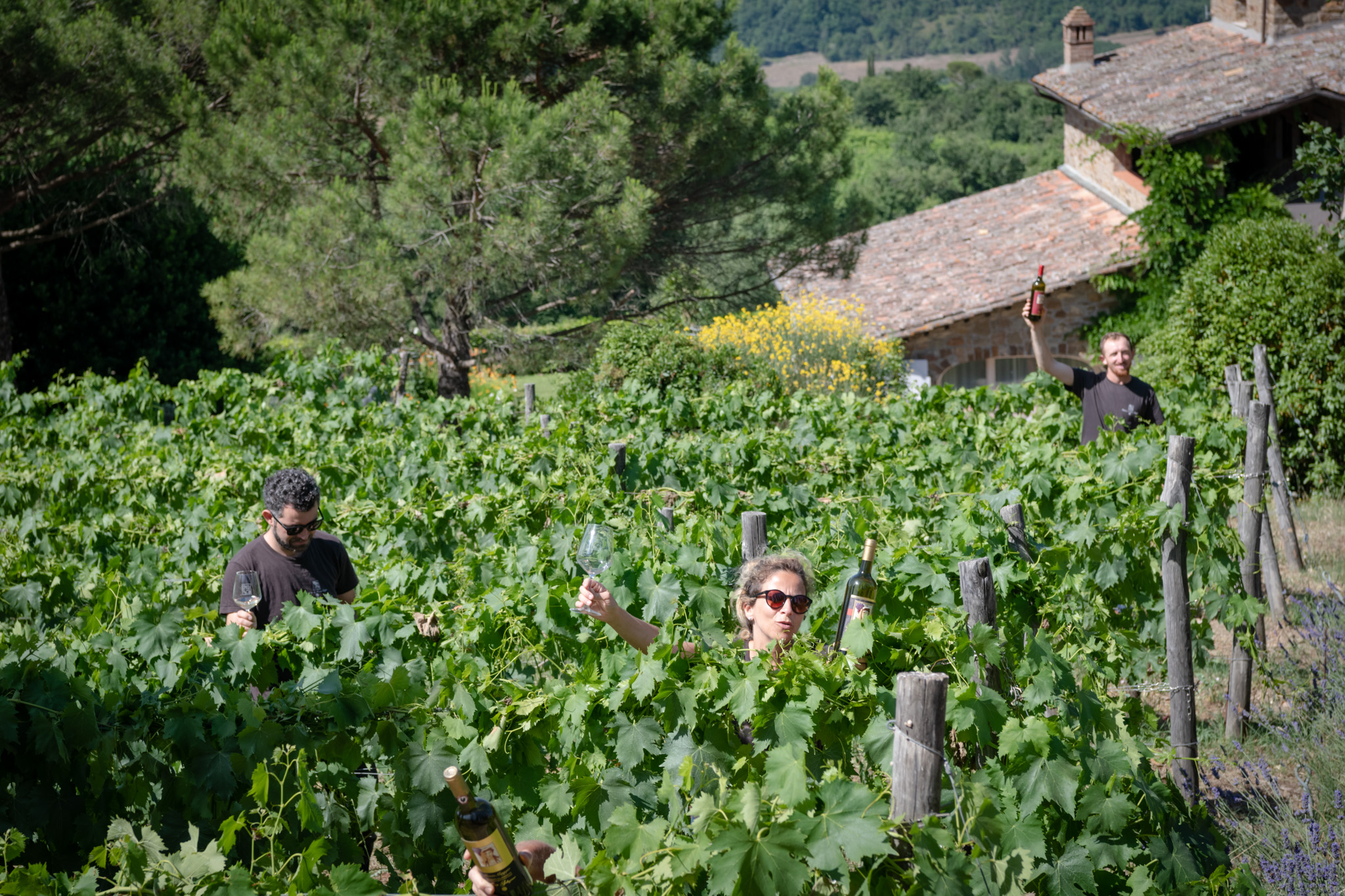
Understanding the territory, Sangiovese and centuries of wine culture behind one of Tuscany’s most famous wines
Chianti Classico is one of the most recognisable names in Italian wine.
But what actually makes it special?
Is it Sangiovese?
The Tuscan landscape?
The history?
The soils?
The climate?
Or simply the reputation the region has built around the world?
The answer is not one single element.
What makes Chianti Classico fascinating is the relationship between all of them.
Wine, landscape, history and culture have developed together here for centuries.
And to understand Chianti Classico, you have to look beyond the bottle.
What exactly is Chianti Classico?
Chianti Classico is a historic wine denomination located in the heart of Tuscany, between Florence and Siena.
This distinction matters.
Chianti Classico is not simply another name for Chianti, nor is it a premium version of it.
Chianti and Chianti Classico are separate denominations, with different geographical areas and production regulations.
Chianti Classico comes from its own historic production territory.
Its identity is closely connected with Sangiovese, the Tuscan landscape and the famous Gallo Nero, or Black Rooster, that represents the denomination.
But the name on the label tells only part of the story.
1. Chianti Classico has a unique territory
The first reason Chianti Classico is special is also the most obvious when you visit:
the landscape.
Vineyards grow across hills surrounded by olive groves, forests and small villages.
But this beauty is not simply a backdrop for tourism.
The landscape is part of the wine.
Vineyard altitude varies.
Exposure varies.
Soils vary.
Temperatures and microclimates vary.
These differences influence how grapes develop and help create diversity between wines produced in different parts of Chianti Classico.
The landscape you see outside the cellar eventually becomes part of what you experience inside the glass.
2. Sangiovese is at the heart of Chianti Classico
If there is one grape that defines Chianti Classico, it is Sangiovese.
Sangiovese is particularly fascinating because of its ability to respond to the environment in which it grows.
The same grape can express itself differently depending on altitude, soil, exposure, vintage and vineyard management.
This means that Sangiovese can act almost like an interpreter of the landscape.
It connects the wine with the place.
And this relationship between grape and territory is one of the most important elements behind the identity of Chianti Classico.
3. Altitude can change the character of the wine
Not all vineyards in Chianti Classico are planted at the same elevation.
And that matters.
Higher-altitude vineyards can experience cooler temperatures, particularly at night.
These conditions can contribute to slower ripening and help preserve acidity while grapes develop aromatic complexity.
For Sangiovese, acidity is particularly important.
It contributes freshness, balance and structure and can play an important role in the wine’s ability to evolve over time.
This is why altitude is not simply an interesting number to mention during a wine tour.
It can be part of the wine’s identity.
4. The soils tell another part of the story
Wine begins in the vineyard, and the vineyard begins with the soil.
Throughout Chianti Classico, different geological formations contribute to the diversity of growing conditions.
Two terms frequently associated with the territory are galestro and alberese.
For visitors, these words can initially sound like technical wine vocabulary.
But once you walk through a vineyard and actually see the stones beneath the vines, the concept becomes much easier to understand.
Soil affects factors such as drainage, water availability and vine development.
It is another piece of the complex relationship we call terroir.
5. Chianti Classico has centuries of history
Chianti Classico is not a wine region created recently for tourism.
Wine and agriculture have shaped this territory for centuries.
Its history is connected with the rivalry between Florence and Siena, the historic League of Chianti and the famous legend of the Gallo Nero.
In 1716, Grand Duke Cosimo III de’ Medici defined boundaries for wine-producing territories that included the historic Chianti area.
This long relationship between place and wine helps explain why Chianti Classico today is much more than a geographical name.
It is a cultural identity.
6. The Gallo Nero connects the wine with its history
One of the easiest ways to recognise Chianti Classico is the Gallo Nero, the Black Rooster.
Its origins are connected with the historic identity of the Chianti territory and the medieval League of Chianti.
Today, the symbol immediately connects a bottle with the Chianti Classico denomination.
For visitors, however, it can become something more interesting.
Once you have travelled through the territory, visited its vineyards and tasted its wines, the Gallo Nero stops being simply a logo.
It becomes a reminder of a real landscape.
7. Chianti Classico is not one single style of wine
This is one of the most interesting things to understand.
There is no single taste that represents every bottle of Chianti Classico.
Even when Sangiovese remains at the centre, wines can show significant differences.
A producer working at higher altitude may face different conditions from one located elsewhere in the denomination.
Soils may differ.
Exposures may differ.
Winemaking philosophies may differ.
And every vintage adds another variable.
This diversity is one of the reasons exploring Chianti Classico through different producers can be so rewarding.
8. Annata, Riserva and Gran Selezione offer different perspectives
Another way to explore the diversity of Chianti Classico is through its three principal categories:
Annata, Riserva and Gran Selezione.
They follow different requirements and can offer different expressions of Sangiovese and the territory.
But they should not simply be understood as “good, better and best”.
A great Annata can offer a beautiful and immediate expression of its origin.
A Riserva can show another level of evolution.
A Gran Selezione can provide yet another interpretation of place and selection.
Together, they demonstrate just how many ways Chianti Classico can be expressed.
9. Food is part of the Chianti Classico experience
Chianti Classico makes even more sense at the table.
Sangiovese’s natural acidity and structure make it particularly suited to food.
And historically, wine in Tuscany has always belonged to a wider gastronomic culture.
Extra virgin olive oil.
Bread.
Pecorino.
Cured meats.
Pasta.
Vegetables.
Roasted and grilled meats.
Wine and food developed alongside one another.
For this reason, tasting Chianti Classico with Tuscan food can reveal another side of the wine.
It places it back into the cultural context in which it belongs.
10. Biodiversity matters
A vineyard does not exist in isolation.
Around the vines there may be forests, olive groves, grasses, flowers, insects, animals and countless microorganisms within the soil.
Together they form an agricultural ecosystem.
This becomes particularly interesting when visiting an organic winery.
Organic viticulture encourages us to look beyond the individual vine and consider the wider environment in which grapes are produced.
And if wine is an expression of place, understanding that environment becomes part of understanding the wine itself.
Chianti Classico at Fattoria di Montemaggio
At Fattoria di Montemaggio, near Radda in Chianti, many of these elements can be observed in the same place.
Montemaggio is an organic estate in the heart of Chianti Classico, with vineyards situated at high altitude and surrounded by olive groves and woodland.
Sangiovese plays a central role.
The soils include galestro and alberese.
Biodiversity and organic viticulture are part of the way the estate approaches its vineyards.
Here, concepts such as altitude, soil, terroir and Sangiovese are not simply things to discuss during a tasting.
They are visible in the landscape.
Why does Chianti Classico taste different from one winery to another?
Because a denomination establishes rules.
It does not erase individuality.
Every winery works with its own vineyards, exposures, soils and microclimates.
Each producer also makes decisions.
When to harvest.
How to ferment.
How to age the wine.
How to interpret the vintage.
This is why visiting more than one winery can be so educational.
You begin to recognise the common identity of Chianti Classico while discovering how differently that identity can be expressed.
Is Chianti Classico worth visiting if you are not a wine expert?
Absolutely.
In fact, visiting the territory may be one of the easiest ways to understand it.
You do not need to memorise grape varieties, geological formations or production regulations before arriving.
A good wine experience should make these concepts understandable.
Walk through the vineyard.
Look at the soil.
Visit the cellar.
Taste the wine.
Ask questions.
The landscape does much of the teaching for you.
Why tasting Chianti Classico in Tuscany is different
You can drink Chianti Classico almost anywhere in the world.
But tasting it in the place where it was produced changes the experience.
You can see the hills that influenced the vineyards.
You can feel the temperature.
You can observe the soils.
You can understand the distance between vineyard and cellar.
You can taste the wine while looking at the landscape that helped create it.
Nothing about the chemical composition of the wine magically changes because you are in Tuscany.
Your understanding of it does.
And that context can completely change the way you experience the glass.
What makes the best Chianti Classico wine tasting?
The best wine tasting is not necessarily the one with the largest number of wines.
It is the one that helps you understand them.
A meaningful Chianti Classico wine tasting should connect:
the vineyard,
the territory,
Sangiovese,
the cellar,
and finally the glass.
The objective should not be to overwhelm visitors with technical terminology.
It should be to make wine more understandable.
Because the more you understand where a wine comes from, the more interesting every sip becomes.
Discover what makes Chianti Classico special at Fattoria di Montemaggio
At Fattoria di Montemaggio, visiting the vineyards and cellar before tasting the wines creates a direct connection between landscape and glass.
Organic viticulture, high-altitude vineyards, Sangiovese, biodiversity and the soils of Chianti Classico become parts of the same experience.
And perhaps this is ultimately what makes Chianti Classico so special.
It is not just one grape.
Not just one soil.
Not just one tradition.
And not just one beautiful landscape.
It is the relationship between all of them.
✍️ ABOUT THE AUTHOR
Francesco Garuglieri is a Wine Communicator at Fattoria di Montemaggio, an award-winning organic winery in the heart of Chianti Classico, Tuscany.
Specialising in wine communication and hospitality, his work focuses on making wine accessible by connecting terroir, organic viticulture, biodiversity and the experience of visiting Tuscany. His articles explore Chianti Classico, wine tourism and the culture behind authentic Tuscan wine experiences.
Leave a Reply