


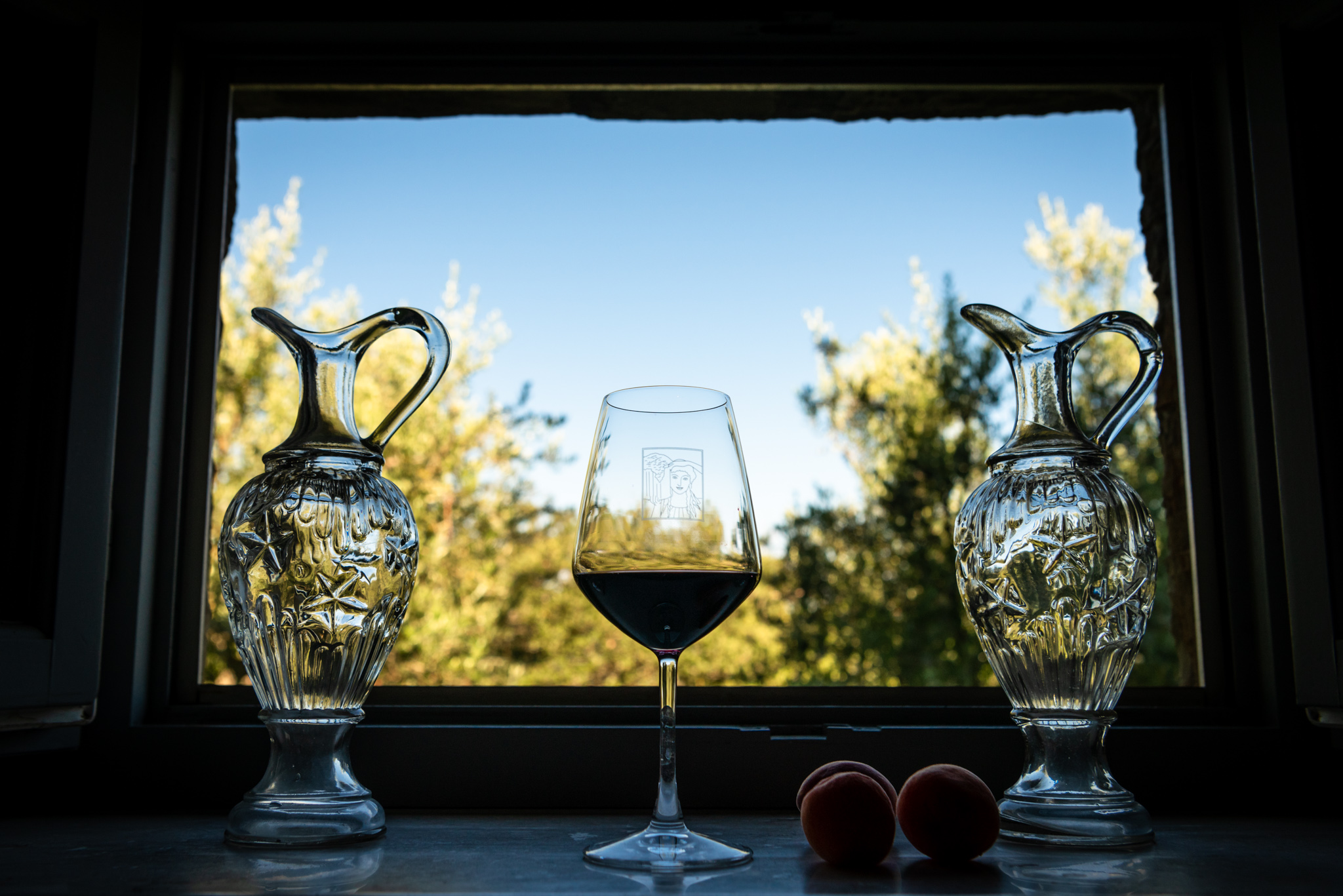
Why it is not a performance, but an encounter
In recent years, the way we talk about wine has changed dramatically.
Tasting has become, for many, a public act: scores, quick judgments, descriptions that increasingly resemble one another. Wine is often presented as something to evaluate rather than something to encounter.
And yet, wine was never meant to be a performance.
It was meant to be a dialogue.
To taste wine today is to make a choice:
to stay on the surface, or to accept a slower, less immediate, but more authentic encounter.
1. How modern tasting has changed
Originally, tasting was an intimate gesture.
Wine was tasted to understand, to share, to accompany food and time.
Over the years, tasting has gradually become:
-
an exercise in recognition
-
a competition of precision
-
a display of competence
This evolution has brought value in terms of vocabulary and technical awareness,
but it has also shifted attention away from wine as experience toward wine as judgment.
Today, many people feel the need to return to a different approach.
2. Wine does not ask to be judged
Wine does not need a score to exist.
It does not seek approval or consensus.
Every wine is born from a specific context:
-
a place
-
a vintage
-
a series of agricultural and human choices
To taste wine as if it were an abstract exercise is to remove meaning from everything that created it.
An authentic encounter with wine does not begin with the question
“Is it good or not?”
but rather with
“What is this wine trying to express?”
3. Tasting as an act of listening
Mindful tasting begins with listening.
Listening to:
-
the rhythm with which the wine opens
-
sensations as they emerge naturally
-
the context in which the tasting takes place
This kind of tasting does not require advanced technical knowledge.
It requires attention.
It is an approach that slows time down and restores depth to the experience.
4. The importance of context
A wine is never exactly the same in every situation.
It changes with:
-
the place
-
the people around the table
-
the moment of the day
-
one’s state of mind
Tasting a wine where it is made allows elements to emerge that remain invisible elsewhere:
the landscape, the climate, the silence, the agricultural rhythm.
This is why experiences lived in places like Fattoria di Montemaggio feel different: the wine is not separated from its environment, but deeply connected to it.
5. The illusion of the “perfect” tasting
There is often a search for the perfect tasting:
the ideal order, the right glass, the exact temperature.
All of these elements matter — but they are not enough.
A tasting can be technically flawless and still feel empty.
Or it can be imperfect and deeply memorable.
The difference lies in a shift:
-
from control to presence
-
from performance to relationship
6. Tasting without the need to prove anything
One of the greatest obstacles to authentic tasting is the need to demonstrate something:
knowledge, recognition, expertise.
When this pressure disappears, wine returns to what it has always been:
a companion to experience.
Tasting without needing to prove anything allows you to:
-
feel more
-
judge less
-
remember more
7. The role of silence and slowness
Not everything needs to be commented on immediately.
Not every sensation must be translated into words.
Silence is part of tasting just as much as the wine in the glass.
It is often in silence that certain sensations become clear.
Slowness is not a limitation — it is a condition.
8. Why this approach matters today
We live in a time that accelerates everything.
Even pleasure.
Tasting as an encounter is a gentle form of resistance:
a way to reclaim attention, presence, and depth.
It is not about drinking more.
It is about drinking better, in the most human sense of the word.
Conclusion — Returning to the encounter
Tasting wine today does not mean rejecting knowledge.
It means placing it back in service of experience.
Wine is not a performance to be evaluated,
but an encounter to be lived.
When this happens, wine stops being just something you taste
and becomes something that stays with you.
Leave a Reply