


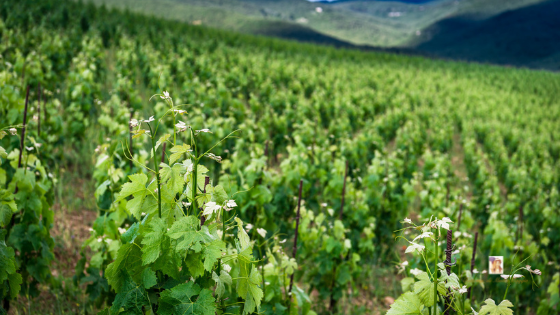
Memory, emotion, and context in the journey of wine
It often happens that we return from a trip having visited many places, tasted many wines, lived many experiences — and yet, only a few remain clearly in our memory.
This is not a question of objective quality.
Nor is it about price or prestige.
It is a question of memory.
In the world of wine tourism, some experiences fade quickly, while others stay with us for years, sometimes resurfacing unexpectedly through a scent, a flavor, or a sensation. Understanding why this happens is essential — both for travelers and for those who create these experiences.
1. Memory does not record everything — it selects
Memory is not a neutral archive.
It is selective, emotional, imperfect.
We do not remember everything we do.
We remember what involves us.
In wine experiences, this means:
-
technical data tends to disappear
-
emotions remain
-
context amplifies or weakens the experience
A wine can be excellent, but if it is experienced in a rushed or impersonal way, it rarely leaves a deep trace.
2. Emotion as the gateway to memory
Experiences that stay with us are almost always linked to a specific emotion:
-
a feeling of genuine welcome
-
an unexpected moment of calm
-
a meaningful conversation
-
a shared silence
Emotion does not need to be intense or spectacular.
Often, it is subtle — but authentic.
In wine, emotion arises when a connection is created between what is being tasted and the context in which it is experienced.
3. The role of context: where and how matter more than what
An experience never exists in isolation.
It always exists within a context.
In wine and food experiences, context includes:
-
the landscape
-
the rhythm of the visit
-
the way guests are welcomed
-
the time available
Tasting the same wine in different places creates different memories.
Not because the wine changes, but because the relationship with it changes.
This is why experiences lived in places like Fattoria di Montemaggio are remembered not only for the wines, but for the overall atmosphere that surrounds them.
4. The difference between consumption and experience
Many wine and food activities are designed for consumption:
-
consumption of time
-
consumption of products
-
consumption of information
An experience that lasts in memory, instead, is designed for presence.
This means:
-
fewer stimuli, more attention
-
less quantity, more depth
-
less rush, more listening
When an experience does not ask us to “do more,” but to be present, memory works differently.
5. The importance of rhythm
Rhythm is one of the most underestimated elements.
Experiences that move too quickly leave no space for assimilation.
Experiences that are too dense make it difficult to distinguish one moment from another.
The right rhythm creates:
-
natural pauses
-
moments of silence
-
time to process what is happening
In wine experiences, rhythm is essential: it allows sensations to emerge without being overwhelmed.
6. Why we don’t remember standardized experiences
Standardized experiences are reassuring, but rarely memorable.
When everything is expected, nothing surprises us.
Memory needs:
-
a deviation
-
an unexpected moment
-
a sensation that was not programmed
This does not mean random improvisation, but space for the unexpected.
7. The value of imperfection
Paradoxically, it is often small imperfections that make an experience memorable:
-
an explanation that is not polished but sincere
-
a setting that does not try to impress
-
a moment that does not follow the script
Imperfection creates humanity.
And humanity creates memory.
8. When wine becomes a memory, not just a product
A wine is truly remembered when it stops being just a product and becomes:
-
the symbol of a moment
-
the echo of a place
-
the trace of an experience
In these cases, opening a bottle is not just about drinking wine.
It is about returning.
And this is the deepest value of a well-lived wine experience.
Conclusion — What stays with us is never accidental
The experiences that remain are not the loudest or the most complex.
They are the ones that respect time, context, and people.
In the journey of wine, what stays with us is often invisible:
a sense of balance, a quiet memory, an authentic connection.
And in the end, that is what we are truly looking for.
Leave a Reply