

A wine tasting is more than a tasting
When people think about a wine tasting in Chianti Classico, they often imagine a table, a few glasses, and a beautiful view.
But a proper wine tasting goes much further.
It is not only about tasting wine.
It is about understanding where it comes from, how it was made, and why it tastes the way it does.
It starts in the vineyard
A real wine tasting begins before the first glass is poured.
It starts in the vineyard.
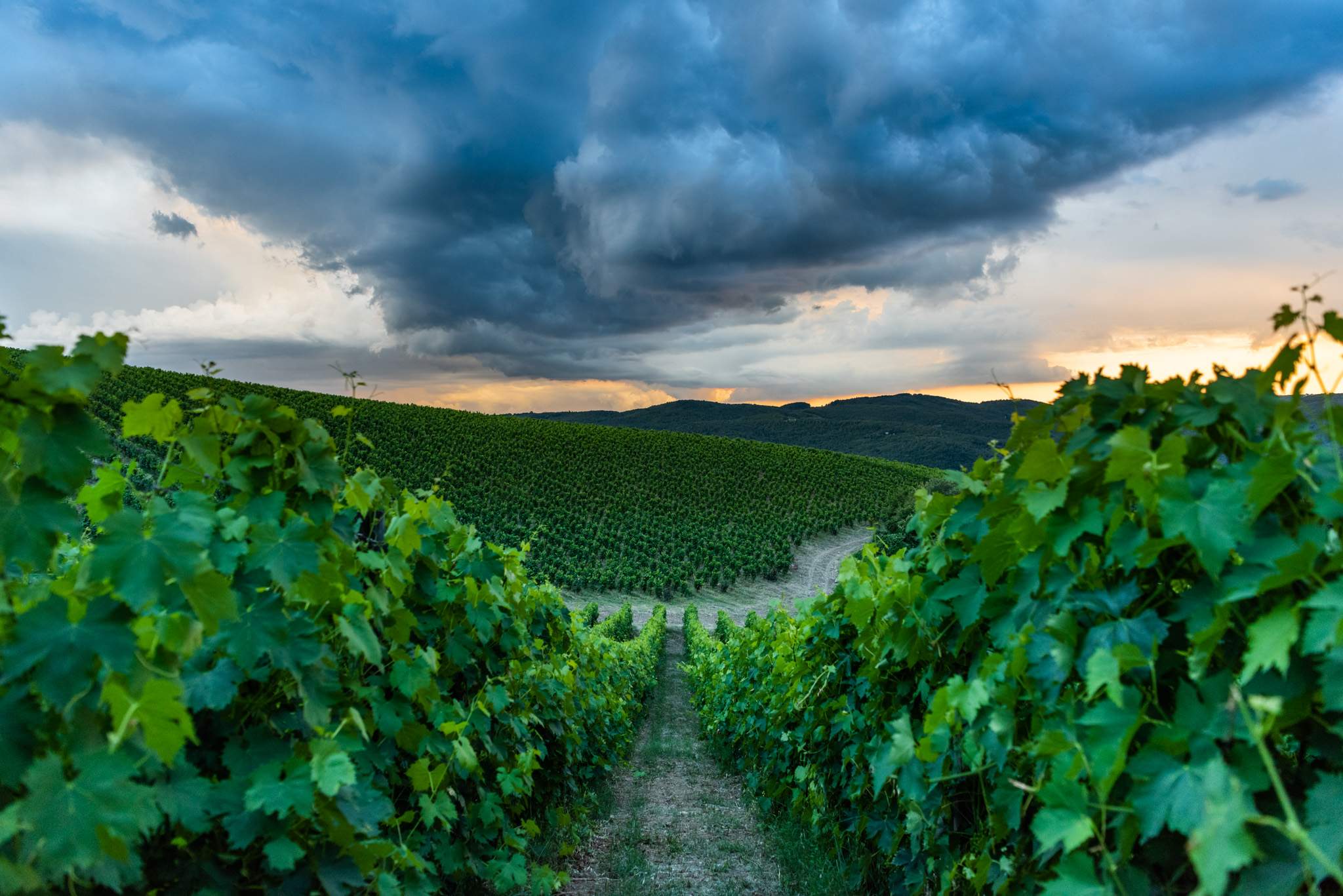
The landscape of Chianti Classico plays a fundamental role in shaping the wine:
- rolling hills
- forests surrounding the vineyards
- limestone and galestro soils
- altitude and temperature shifts
Walking through the vineyard allows you to connect visually and physically with what you will later taste.
Understanding terroir
In Chianti Classico, wine is always the result of multiple elements working together.
- soil composition
- climate conditions
- vineyard management
- seasonal variations
During a wine tasting, you are not just tasting a product.
You are tasting the result of this entire system.
From vineyard to cellar
After the vineyard, the experience naturally moves into the cellar.
This is where key decisions are made:
- fermentation methods
- aging processes
- choice of vessels
- time management
These elements define structure, texture, and evolution of the wine.
The tasting moment
When the tasting begins, everything becomes more focused.
You are guided through different wines, often from younger expressions to more complex ones.
At this stage, you begin to notice:
- aromatic differences
- structural variations
- balance between acidity, tannins, and alcohol
- evolution in the glass
The important shift is this:
you are no longer just tasting — you are understanding.
Why guidance makes the difference
A wine tasting without explanation can still be enjoyable.
But without context, it remains superficial.
A well-structured tasting translates technical decisions into something perceptible.
It connects:
- what happened in the vineyard
- what was done in the cellar
- what you feel in the glass
This is what transforms a simple tasting into a meaningful experience.
The role of organic farming
At wineries that follow organic principles, the connection between land and wine becomes even clearer.
Organic farming is not only about avoiding synthetic chemicals.
It is about maintaining a living ecosystem.
- healthier soils
- balanced vines
- increased biodiversity
These factors often translate into wines that are more precise, expressive, and transparent.
Time and rhythm
One of the most distinctive aspects of a wine tasting in Chianti Classico is the pace.
The experience is not rushed.
There is time to:
- observe
- ask
- revisit
- reflect
This slower rhythm is part of what makes the experience memorable.
What you take away
At the end of a wine tasting, you do not just remember the wines.
You remember:
- the landscape
- the atmosphere
- the people
- the sense of understanding
This is what defines a true wine experience in Chianti Classico.
Experience it at Fattoria di Montemaggio
At Fattoria di Montemaggio, wine tastings are designed to connect every step of the process — from vineyard to glass.
Small groups, organic farming, and a focus on clarity create an experience that is both accessible and meaningful.
👉 You may also like:
https://www.montemaggio.com/wine-tasting-chianti-classico
👉 Book your wine tasting:
https://www.montemaggio.com/tour-reservation
About the Author
Francesco Garuglieri is a wine communicator at Fattoria di Montemaggio, an organic winery in the heart of Chianti Classico.
His work focuses on translating vineyard, terroir, and winemaking processes into clear and meaningful tasting experiences.
He provides an authentic and grounded perspective on wine.
Leave a Reply